
Understand the meaning, preparation and step-by-step vidhi of a Hindu puja — at home, at a temple, or online with a verified Vedic pandit.
Puja is a heartfelt act of devotion. It is a way of offering gratitude, love and intention to the Divine, to a deity, to a guru, or to the sacred presence within and around us.
The word puja comes from Sanskrit and broadly means reverence, honour and offering. In practice, puja is a conversation between the devotee and the Divine. We welcome the deity into a clean and decorated space, offer water, flowers, fragrance, light and food, and then receive those offerings back as prasad — grace that we share with family and guests.
A puja can be as simple as lighting a diya and folding your hands before a family photograph, or as elaborate as a multi-hour Vedic anushthan with a priest, kalash, havan and mantra recitation. The outer form changes; the inner movement — attention, humility and devotion — remains the same.
At MyPujaSetu, every puja is performed with a proper sankalp in your name and gotra, following the traditions of the temple and the guidance of experienced pandits.
Different families and traditions explain puja in different ways. These are the most common intentions devotees bring to a puja.
To thank the Divine for health, family, work and the everyday blessings we often take for granted.
To place a clear prayer before the Divine — for courage, clarity, healing, prosperity or peace.
To mark births, naming ceremonies, weddings, new homes, new ventures and other important transitions.
To slow down, sit in a sacred space and let the mind settle through mantra, light and silence.
To pass on rituals, language and values from one generation to the next.
To ask for protection, removal of obstacles and support through a difficult period.
The same devotion can be expressed at home, at a temple or online. Each setting has its own rhythm and strengths.
A familiar, intimate setting. A pandit visits your home and performs the puja with your family, using your altar or a temporary sacred space. Ideal for griha pravesh, satyanarayan, namkaran, mundan and anniversary rituals. Book a pandit at home →
Performed at a specific shrine by the temple’s own priests. The temple’s sanctity, daily rituals and community atmosphere add a distinct power. Ideal for major temple pujas, festival rituals, dosh nivaran and special anushthans. Book a temple puja →
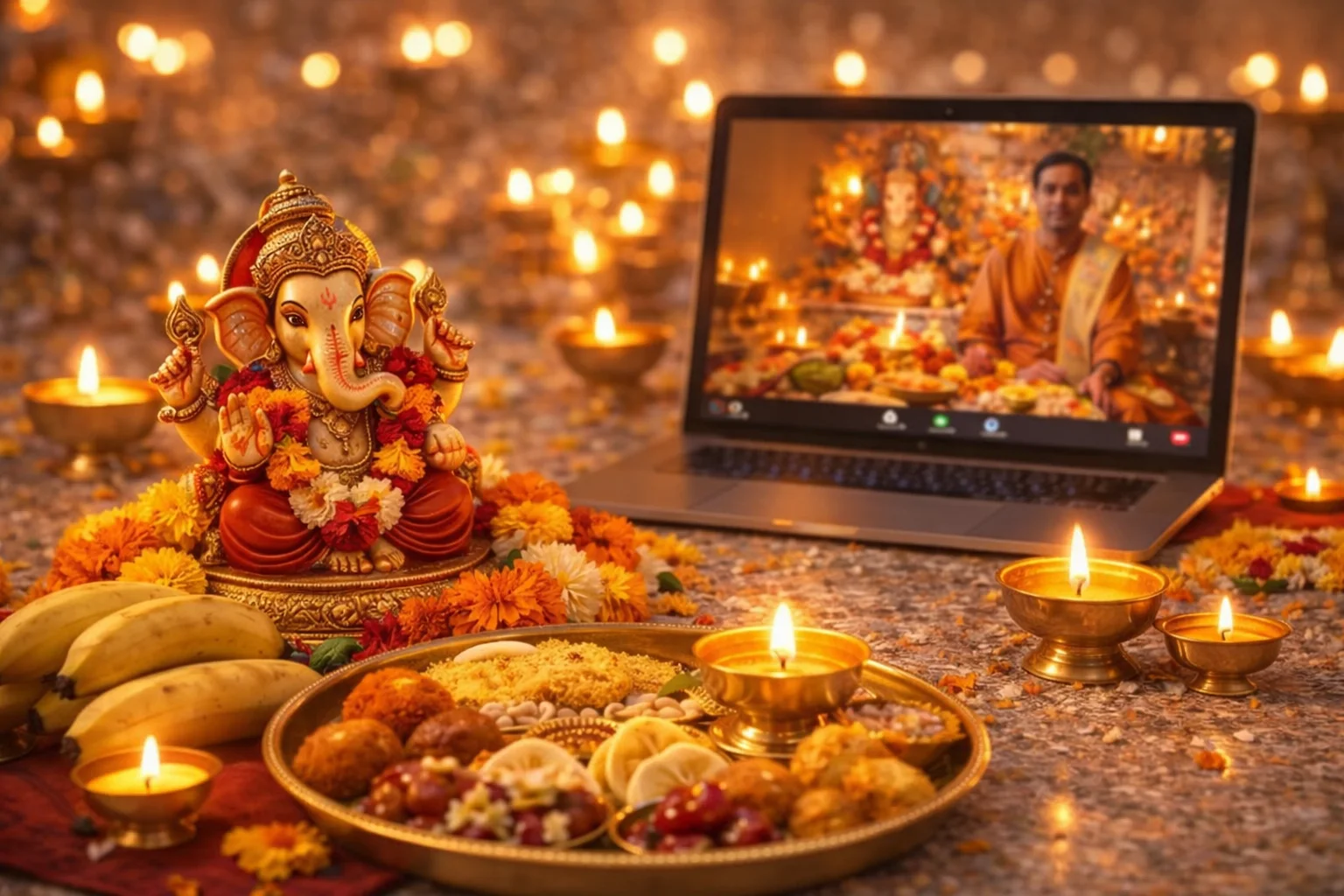
A priest performs the puja at the temple on your behalf while you join live or receive a recorded video. Your name and gotra are included in the sankalp. Ideal for devotees who cannot travel. Explore online puja →
A focused offering — flowers, cloth, sweets, fruit or a custom combo — carried to the temple and placed before the deity on your behalf. Ideal for devotees who want to offer something tangible at a specific shrine. Offer chadhava →
Preparation is part of the puja. A clean space, a clean body and a calm intention matter more than an expensive samagri list.
Most Hindu pujas follow a similar arc, even when the details vary by region, deity and family tradition. Here is the general sequence.
The priest or devotee names the person, gotra, date and purpose of the puja. This turns a general ritual into a personal prayer.
A few deep breaths, a prayer to Lord Ganesha and a moment of silence mark the beginning. The mind is invited to arrive fully.
For larger pujas, a kalash filled with water and mango leaves is placed and invoked. At home, a simple altar or a clean seat can serve the same purpose.
The deity is invited into the murti, picture or symbol with mantras. The space is now treated as a living shrine.
Offerings are presented one by one: water, flowers, fragrance, incense, lamp, food and more. Each offering is accompanied by a mantra and a specific hand gesture.
A lamp is waved before the deity while an aarti song or mantra is sung. Devotees receive the light by cupping their hands over the flame and touching their eyes.
Food that has been offered becomes prasad. It is distributed to everyone present, and some is kept for family members who could not attend.
The puja ends by asking forgiveness for any mistakes or omissions, followed by a final bow. The space is left clean and the offerings are handled respectfully.
You can adapt the same ritual to the time and items you have. Traditionally, the number of upacaras (offerings) determines the format.
A short daily practice for busy days or travel.
A balanced daily ritual for individuals and families.
The full sixteen-step shodashopachara format.
Each item in a puja carries a meaning. The list below covers the offerings you will meet most often.
There is no single “best” setting. The right choice depends on the ritual, your family’s tradition and what is practical for you.
| Setting | Best for | Who performs | What you receive |
|---|---|---|---|
| At home | Family rituals, griha pravesh, satyanarayan, namkaran, mundan | A pandit at your home, with your family participating | The full ritual in your space, prasad and personal guidance |
| At a temple | Temple-specific pujas, festivals, dosh nivaran, special anushthans | The temple’s own priests | The puja at the shrine, photo or video confirmation and prasad where permitted |
| Online | Devotees who cannot travel or want a specific temple ritual | A verified priest at the temple, on your behalf | Live or recorded video, sankalp in your name and prasad by courier where permitted |
You do not need to memorise long verses to begin. These short mantras are widely used and easy to learn.
Offer prasad first to elders and guests, then take it yourself. Sharing is part of the ritual, not an afterthought.
Used flowers and leaves can be composted, buried or returned to flowing water, following local rules. Avoid throwing sacred items in the regular bin.
Wipe the altar, wash the utensils and store the murti or picture respectfully. A clean shrine invites a settled mind.
The puja ends, but the sankalp continues. Note one small action you will take in the coming week that reflects your prayer.
No. A simple daily puja can be performed by anyone with faith and a clean intention. A priest is helpful for complex rituals, specific mantras, temple pujas and ceremonies that require a formal sankalp.
Yes. A lamp, a kalash, a sacred symbol or even a clean space can serve as the focus. The form supports attention; it is not a strict requirement.
You can share your name and family lineage, or simply state that the gotra is unknown. Pandits commonly use a general sankalp in such cases. The intention and sincerity matter most.
Many devotees and temples accept online puja when the priest performs the ritual at the shrine with a proper sankalp in your name. You can join live or receive a video, depending on the temple.
Start with a diya, ghee or oil, incense, fresh flowers, clean water, fruit or a simple sweet, akshata and a small cloth. A pandit can give you an exact list for a specific ritual.
Most temple pujas take 30–90 minutes, depending on the deity, the ritual and the number of participants. Special anushthans can take several hours or multiple days.
Yes. Chadhava is a standalone offering. You can choose the temple, the offering and the date, and our team carries it to the shrine on your behalf.
Choose a temple puja, a pandit at home or an online ritual. Our team will confirm the muhurat, samagri and video details with you.